By Halcyon, Aneth and Siem (names known to the editors)
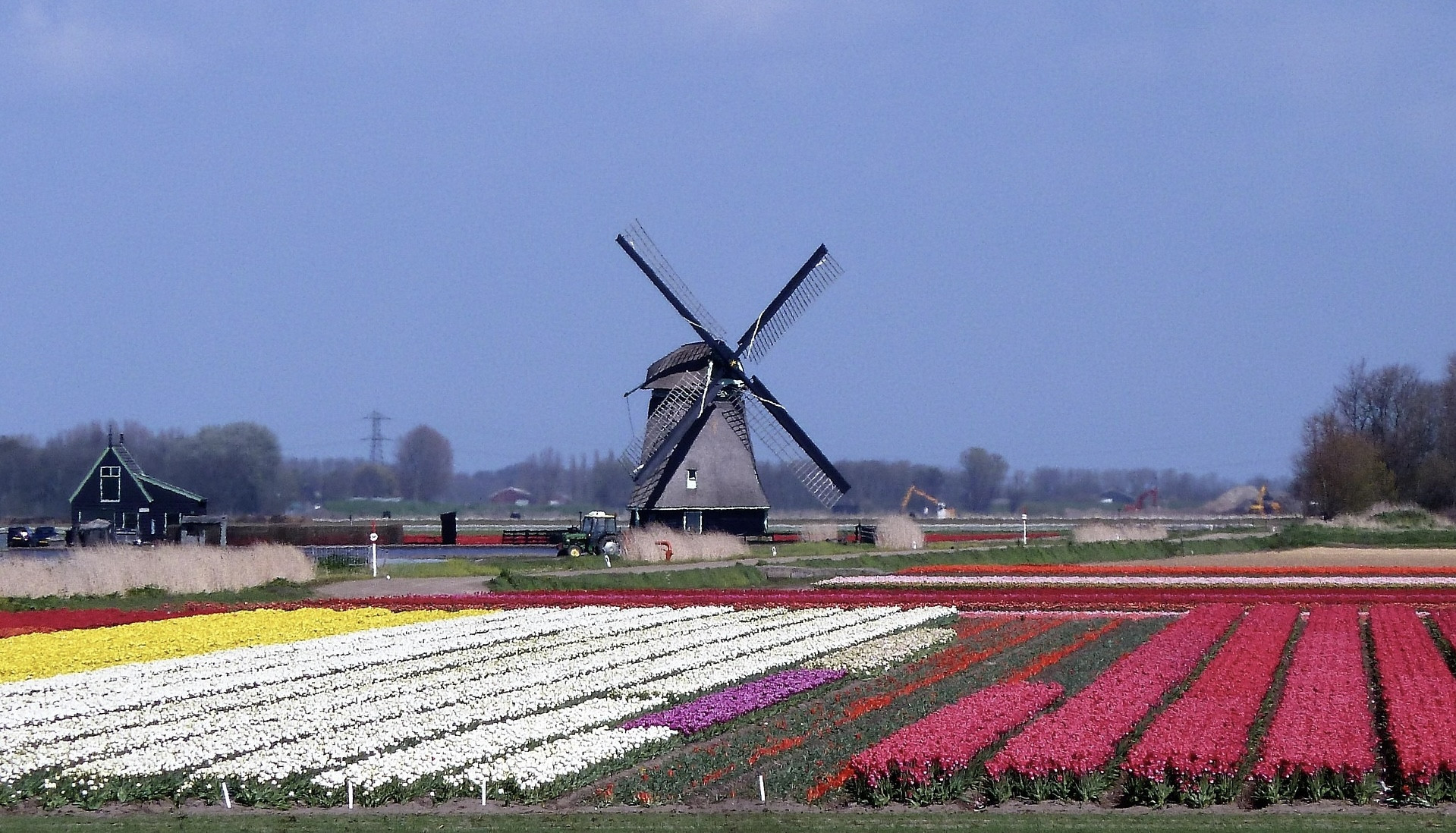
During the Floating Parade in June 2026, dozens of boats decorated with flowers will sail through the Westland region in the Netherlands to celebrate the floriculture industry. While this spectacle attracts large crowds every year, floriculture is often anything but sustainable. Participants do not necessarily grow organically and use toxic pesticides. The organisers praise the use of Shell HVO100 fuel as a step towards a ‘more sustainable’ parade, but activists from Scientist Rebellion and Extinction Rebellion question this claim. They point to the contradiction between the green façade and the chemical reality behind the flower industry, which is obscured by the event.
The Westland and floriculture
The Westland economy is largely based on greenhouse horticulture: vegetables, fruit, flowers and ornamental plants. The latter two categories are collectively referred to as ‘floriculture’. In 2024 and 2025, around €12 billion worth of floriculture products were exported. 1 A significant proportion of these were grown in the Westland.
Agricultural Pesticides
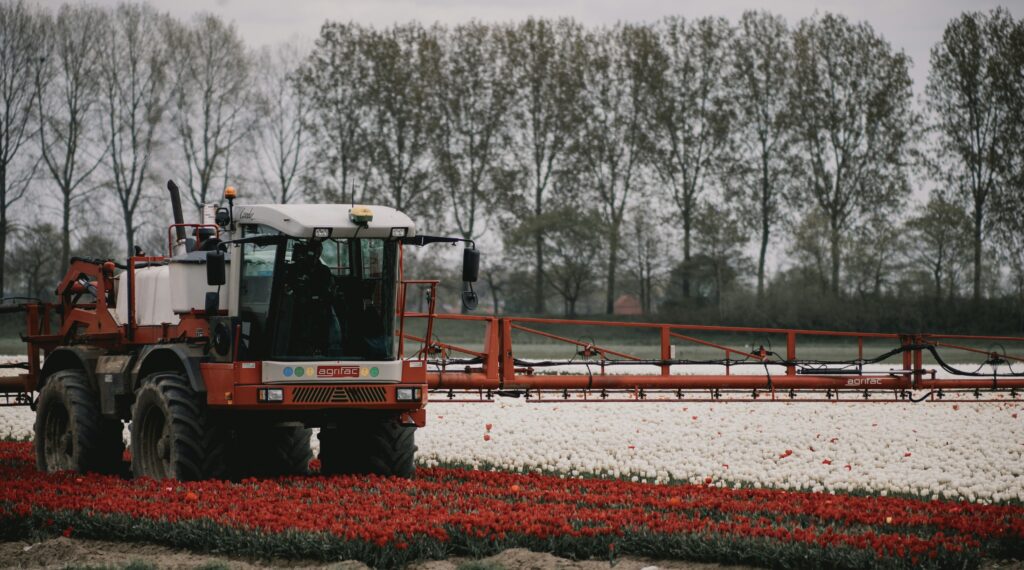
Greenhouse horticulture traditionally involves the use of large quantities of pesticides. The industry refers to these as plant protection products. Another name for them is agricultural toxins. Pesticides are used to protect crops by combating fungi, insects and weeds. This protection is intended to safeguard the yield and quality of the crop. Pesticides are classified according to their mode of action: insecticides, fungicides and herbicides. 2
In greenhouse horticulture, two main types of pesticides are in use: insecticides (against insects) and fungicides (against fungi). Research by PAN-Netherlands in 2026 into residues on cut flowers identified a total of 79 different active substances, excluding metabolites. Of the residues found, more than half (57%) were active as insecticides, and 43% as fungicides. Per hectare, the highest volume of pesticides is used in the cultivation of roses under glass.
The substances used in floriculture are the same as those used elsewhere in greenhouse horticulture: these include synthetic pyrethroids, neonicotinoids and various fungicides. Of the active substances found in cut flowers, almost a third are banned for use as plant protection products in the EU and in the Netherlands. Forty substances (51%) are classified as highly hazardous pesticides, fifteen substances are PFAS pesticides, and eleven substances are candidates for substitution. 3
Pesticides are, by definition, designed to kill or harm living organisms. It is therefore not surprising that they also claim unintended victims: people who live or work in or near greenhouses, wildlife, and aquatic and soil life.
Harmful effects on humans
People can be exposed to pesticides through inhalation, skin contact, or food and drinking water. The risks apply in particular to gardeners and nursery staff, but also to people living near greenhouses and to workers in the floriculture sector, such as auction staff and florists. As there are no maximum residue limits for pesticides in cut flowers, the safety of florists and staff at flower auctions is not guaranteed. 3
Foreign research shows that there is a link between farmers’ exposure to pesticides and Parkinson’s disease, and between pregnant women’s exposure to pesticides and developmental problems in children. Research also shows that specific substances, such as synthetic pyrethroids, can disrupt the immune system and hormonal balance and are linked to chronic diseases such as asthma. There are also indications of a link with certain forms of cancer and neurodegenerative disorders. 4 5
Residents living near greenhouse horticulture businesses are also at risk. The use of pesticides in greenhouse horticulture leads to the emission of vapours and aerosols from the greenhouse air into the outside air via ventilation. In situations where homes and greenhouses are located a short distance apart, concentrations in the lee of a greenhouse can rise to several tens of µg/m³ or higher immediately after application. The RIVM is currently conducting research into the health effects on local residents (OBO-2), but the results of this are not yet fully available.
That the risks to people are not merely theoretical became painfully clear in October 2024, at a court hearing in Rennes, in a case that attracted international attention. The French florist Laure Marivain worked as a flower sales representative in 2011, surrounded daily by cut flowers from the Netherlands and South America. During her pregnancy, she was constantly exposed to pesticides on those flowers — substances that were largely banned in the EU. Her daughter Emmy was born with health problems and was diagnosed with acute lymphoblastic leukaemia at the age of four. For seven years, the girl fought the disease, enduring hundreds of medical procedures and several relapses.
On 12 March 2022, Emmy died at the age of eleven. An independent panel of scientists and doctors established a causal link between the exposure during pregnancy and the child’s illness. Emmy Marivain thus became the first child whose death was officially recognised by the French FIVP, the fund that compensates victims of pesticides. 6 7
Harmful effects on the environment and biodiversity
Pesticides reach the natural environment via several routes: runoff into ditches and streams during rain, drift during spraying, and via the wastewater from greenhouse horticulture businesses. When it rains, pesticides run off from fields into surface water. Many of these substances degrade slowly and remain in the environment for a long time, which is harmful to aquatic organisms such as insects, fish and aquatic plants. In addition, there is a so-called cocktail effect: different pesticides end up in the water together and enhance each other’s effects, which increases the ecological damage. 8
In as many as 53% of cases, Dutch surface water contains excessive levels of pesticides. Enforcement of water quality standards is sporadic. As a result, Dutch surface waters are among the most polluted in Europe.
Many insects spend part of their life cycle in the water. But even on land, pesticides can disrupt the balance in the food chain, causing species to disappear and biodiversity to decline. There are 48,000 species of plants, animals and fungi in the Netherlands. Insects form the basis of the food chain (20,000 species in the Netherlands). Between 1990 and 2017, the biomass of flying insects declined by 75%. 9
In 2018, almost half of all bee species were (critically) endangered, vulnerable or extinct. 10 Recent figures from the National Biodiversity Dashboard show that this negative trend is continuing. 11
These pollinators are particularly vulnerable: their decline has direct consequences for the food supply of, for example, birds, amphibians or small mammals. But this is also a cause for concern for food production in agriculture, as they pollinate 75% of our food crops. 12 13 It is ironic that agriculture is so dependent on pollinators and yet at the same time poses the greatest threat to insects and biodiversity. 14
In 2024, the European Nature Restoration Regulation was adopted. 15 EU Member States are now obliged to halt the decline of nature and bring about an upward trend in biodiversity. In this legislation, the European Parliament and the Council acknowledge that pollinator populations are in sharp decline.
A 2021 assessment by the European Commission revealed that significant problems remain, including the negative impact of pesticides on pollinators. 16 The European Commission also acknowledges that previous measures were insufficient, and therefore aims to ensure that pollinator numbers increase again by 2030 through stricter rules, better monitoring and concrete targets (Nature Restoration Regulation: Recital 52).
Furthermore, the European Commission intends to ban the use of pesticides in key nature areas to better protect endangered pollinators such as bees and butterflies (Nature Restoration Regulation: Recital 53). This could involve (greenhouse) horticulture in the immediate vicinity of N2000 nature areas such as the dunes. How this will be implemented in practice in the Netherlands must be set out in a National Plan containing restoration measures. In Annex VII of the Nature Restoration Act (Annex VII: List of examples of restoration measures as referred to in Article 14(16)), point 19 explicitly mentions the restoration measure “ceasing or reducing the use of chemical pesticides as well as artificial fertilisers and animal manure”. It is a crucial step towards the restoration of nature in Europe.
Carbon footprint
The floriculture sector also contributes to the climate crisis. Dutch greenhouse horticulture as a whole emitted approximately 5.2 megatonnes of CO₂ in 2024. 17 18 Based on CBS allocation keys, around 35% of this can be attributed to floriculture — accounting for some 1.8 megatonnes of CO₂ per year. 19
The sector aims to be climate-neutral by 2040, but the Netherlands Environmental Assessment Agency notes that this target is not yet in sight: there is only a 30% chance of even meeting the interim target for 2030 (a maximum of 4.3 megatonnes). 20 The announcement by the Varend Corso 2026 (Floating Parade 2026) that the event will be ‘even more sustainable’ thanks to Shell HVO100 fuel says nothing about the CO₂ emissions from the cultivation itself — by far the largest climate impact in the chain.
Lenient policy
The Plant Protection Products and Biocides Act (Wgb) regulates the authorisation, marketing and use of plant protection products and biocides. The Act aims to protect humans, animals and the environment from the harmful effects of these substances. The Board for the Authorisation of Plant Protection Products and Biocides (Ctgb) assesses whether products are safe for humans, animals and the environment; only products approved by the Ctgb are permitted in the Netherlands.
Nevertheless, the legislation and regulations leave considerable scope for substances whose harmfulness is highly contested in scientific circles. A prime example is neonicotinoids, a group of insecticides related to nicotine. Various scientists have linked neonicotinoids to increased winter mortality among bee colonies worldwide. 21 Scientific research has shown that these products are directly harmful to wild bees, honeybees and bumblebees, and in 2018 the EU agreed to a ban on their outdoor use. 22
However, this ban was by no means applied in full to greenhouses: neonicotinoids were permitted in all protected crops, and also in floriculture provided the flower buds had been removed — meaning the ban failed to address water pollution and damage to biodiversity. 23 Since then, the authorisation for most neonicotinoids has been withdrawn or rejected; only the active substance acetamiprid remains approved in Europe. 21
A more recent and pressing example is the so-called PFAS pesticides. PFAS (per- and polyfluoroalkyl substances) are man-made compounds that are virtually non-degradable in the environment and accumulate in humans, animals and plants. In Dutch agriculture, 25 active substances that are PFAS compounds are currently authorised, incorporated into over 115 products — including fungicides, herbicides and insecticides. 24 Sales of these products rose from approximately 150,000 kilograms per year in the period 2010–2020 to over 250,000 kilograms in 2023. 25
Denmark banned 23 of these products as of 2026; the Netherlands did not. Water companies and environmental organisations have long warned that PFAS do not belong in the environment, and certainly not in drinking water. 26 In 2025, PAN-Netherlands found that all commonly available flower bulbs examined contained PFAS pesticides, and that the average number of types of pesticides per bulb had increased fivefold in a single year. 27
Finally, there is a fundamental protective measure missing for cut flowers that does exist for food: no maximum residue limits have been set. There is no specific European legislation setting maximum residue limits for plant protection products on cut flowers; existing residue legislation is limited to food and animal feed. 28 This means that for the flowers floating on the Varend Corso — and which florists, auction staff and consumers handle on a daily basis — there are no legal limits on the amount of pesticide they may contain.
Many violations despite enforcement
According to Deputy Minister Erkens (LVVN, Department of Agriculture, Nature and Food Quality), the use of agricultural pesticides has declined in recent years. 29 30 Nevertheless, recent inspections show that there are still many issues.
The Netherlands Food and Consumer Product Safety Authority (NVWA) checks whether agricultural and horticultural businesses and other professional users are complying with the rules. In 2024 and 2025, the NVWA carried out inspections of cut flower cultivation in greenhouse horticulture. Of the 71 inspections, 43 were non-compliant: products were used in excessive doses, for too many applications, at incorrect intervals and/or during an incorrect period. Prohibited products were also used. 31
In August 2024, a Westland horticulturist admitted to being responsible for a large-scale discharge of the long-banned insecticide dichlorvos into surface water. The level exceeded the standard by 6,000 times. The Delfland Water Board and the NVWA drew up an official report. 32 33
In February 2026, PAN Netherlands published a study on pesticides in bouquets. This report focused specifically on cut flowers, including those sold in supermarkets and florists: pesticide residues were found in all 17 bouquets tested. Almost a third of the active substances detected are banned in the EU. Even so-called sustainable, MPS-certified bouquets were found to be contaminated. 3
Research by Avans University of Applied Sciences, commissioned by the television programme Radar, also found that banned pesticides were present in bouquets sold by supermarkets and florists. Of the 23 pesticides detected, eight were no longer authorised due to concerns about human health and the environment. 34 35
In 2025, Natuur & Milieu conducted a further study into pesticides on garden plants, testing ninety plants from seven garden centres and nurseries for 750 different substances. The proportion of plants that did not comply with the agreed standards rose from 4% in 2024 to 10% in 2025. It was striking that the two most commonly found substances — flonicamid and fluopyram — are both PFAS. The increase in these substances is worrying: they accumulate in the environment, are harmful to health and pollute the groundwater. 36
This selection of violations demonstrates that many harmful substances are still being used that are not permitted under the current – already lenient – policy.
The Floating Parade
On Friday 19, Saturday 20 and Sunday 21 June, the annual Varend Corso will take place in the Westland. Several dozen boats decorated with flowers will then sail through the region to put the horticultural industry and individual growers in the spotlight. The event attracts great public interest every year, and that is understandable: it is a colourful and impressive spectacle.
Yet behind that floral splendour lies a less pleasant story. The participating companies do not necessarily grow their flowers organically — and thus use the pesticides discussed in this article. The organisers pay no attention to this. However, they did proudly announce that the parade will sail ‘even more sustainably’ in 2026, thanks to Shell HVO100 fuel. 37
The sustainability of the event is monitored by Rabobank — described by trade journal Nieuwe Oogst as “by far the largest financier of the agricultural and horticultural sector”, and by the bank itself as “traditionally the largest financier of horticulture in the Netherlands”. 38 39 This inevitably brings to mind the proverb about the butcher inspecting his own meat.
There is no mention of the use of agricultural pesticides by the participating growers, nor of the CO2 emissions from the cultivation process itself. The fact that the parade’s spokesperson primarily acts in the media as an advocate for the Westland horticultural sector does little to balance the picture. 40
This is greenwashing at its finest: by ignoring the elephant in the room, the parade gives the impression that Westland’s floriculture sector is on a sustainable path. Perhaps it is time to break that silence.
That is why Scientist Rebellion and Extinction Rebellion are taking action. Initially, we are focusing on raising awareness: among the organisers, partners, funders and participants of the Varend Corso, as well as the public. For now, the tone is friendly and inviting: the aim is to get people thinking. Our central demand is clear: the parade must be toxin-free and climate-neutral.
Should this approach prove insufficient, we do not rule out further escalation. We will take the gentle approach first, but the issue is too serious to leave it at that if the sector continues to look the other way.
- CBS, 2026. Waarde landbouwexport ruim 8 procent hoger in 2025. https://www.cbs.nl/nl-nl/nieuws/2026/03/waarde-landbouwexport-ruim-8-procent-hoger-in-2025 [geraadpleegd op 24 mei 2026][↩]
- Fytoweb, 2015. Gewasbeschermingsmiddelen: indeling volgens werking https://fytoweb.be/nl/gewasbeschermingsmiddelen/gebruik/gewasbeschermingsmiddelen/indeling-volgens-werking [geraadpleegd op 24 mei 2026][↩]
- PAN, 2026. Pesticiden in Boeketten. MPS-certificatie en verboden pesticiden. https://www.pan-netherlands.org/wp-content/uploads/2026/02/Onderzoeksrapport-snijbloemen-14-februari-2026.pdf [geraadpleegd op 30 mei 2026][↩][↩][↩]
- GGD Leefomgeving, 2023. Bestrijdingsmiddelen. https://ggdleefomgeving.nl/schadelijke-stoffen/bestrijdingsmiddelen/ [geraadpleegd op 30 mei 2026][↩]
- Greenpeace, 2015. Gezondheid boeren en omwonenden kwetsbaar door bestrijdingsmiddelen. https://www.greenpeace.org/nl/algemeen/5525/boeren-en-omwonenden-kwetsbaar-voor-gezondheidsrisicos-door-bestrijdingsmiddelen/ [geraadpleegd op 30 mei 2026][↩]
- The Guardian, 2026. ‘There’s a dark side to floristry’: are pesticides making workers seriously ill — or worse? https://www.theguardian.com/society/2026/jan/11/theres-a-dark-side-to-floristry-are-pesticides-making-workers-seriously-ill-or-worse [geraadpleegd op 30 mei 2026][↩]
- Le Monde, 2024. Florists, the overlooked victims of pesticides: ‘If someone had warned me, my daughter would still be here’. https://www.lemonde.fr/en/environment/article/2024/10/14/florists-the-overlooked-victims-of-pesticides-if-someone-had-warned-me-my-daughter-would-still-be-here_6729319_114.html [geraadpleegd op 30 mei 2026][↩]
- Natuur & Milieu, 2025c. Waterkwaliteit en landbouw. https://natuurenmilieu.nl/onderwerpen/schoon-water/waterkwaliteit/waterkwaliteit-en-landbouw/ [geraadpleegd op 30 mei 2026][↩]
- Hallmann, Caspar A., Martin Sorg, Eelke Jongejans, Henk Siepel, Nick Hofland, Heinz Schwan, Werner Stenmans, Andreas Müller, Hubert Sumser, Thomas Hörren, Dave Goulson, Hans de Kroon, 2017. More than 75 percent decline over 27 years in total flying insect biomass in protected areas. PLOS ONE 12(10). https://doi.org/10.1371/journal.pone.0185809[↩]
- Compendium voor de Leefomgeving, 2024. Aantal bedreigde en verdwenen soorten in Nederland, per 2024. https://www.clo.nl/indicatoren/nl105219-aantal-bedreigde-en-verdwenen-soorten-in-nederland-per-2024 [geraadpleegd op 2 juni 2026][↩]
- IUCN, 2026. Nationaal Dashboard Biodiversiteit, 2026. www.dashboardbiodiversiteit.nl[↩]
- Natuur & Milieu, 2024. Bestrijdingsmiddelen in Nederlandse natuur en water. Schending van Europese verplichtingen. https://natuurenmilieu.nl/app/uploads/Bestrijdingsmiddelen-in-Nederlandse-natuur-en-water-versie-7-PDF.pdf [geraadpleegd op 30 mei 2026][↩]
- RIVM, 2026. Bestrijdingsmiddelen in het milieu. https://www.rivm.nl/bestrijdingsmiddelen/bestrijdingsmiddelen-in-milieu [geraadpleegd op 30 mei 2026][↩]
- Naturalis Biodiversity Center, 2026. Statusrapport biodiversiteit 2026 (148pp.). Leiden, Nederland. doi.org/10.5281/zenodo.20004712[↩]
- Europese Unie, 2024. VERORDENING (EU) 2024/1991 VAN HET EUROPEES PARLEMENT EN DE RAAD van 24 juni 2024 inzake natuurherstel en tot wijziging van Verordening (EU) 2022/869. https://eur-lex.europa.eu/legal-content/NL/TXT/PDF/?uri=OJ%3AL%5F202401991[↩]
- Europese Commissie, 2021. VERSLAG VAN DE COMMISSIE AAN HET EUROPEES PARLEMENT, DE RAAD, HET EUROPEES ECONOMISCH EN SOCIAAL COMITÉ EN HET COMITÉ VAN DE REGIO’S Vooruitgang in de uitvoering van het EU-initiatief inzake bestuivers. https://eur-lex.europa.eu/legal-content/NL/TXT/?uri=CELEX:52021DC0261 [geraadpleegd op 2 juni 2026][↩]
- Glastuinbouw Nederland, 2025. Energiegebruik en CO2-emissie glastuinbouw gestegen, maar onder niveaus van vóór energiecrisis. https://www.glastuinbouwnederland.nl/nieuws/energiegebruik-en-co2-emissie-glastuinbouw-gestegen-maar-onder-niveaus-van-voor-energiecrisis/ [geraadpleegd op 30 mei 2026][↩]
- Wageningen University & Research, 2025. Energiemonitor van de Nederlandse glastuinbouw 2024. https://www.kasalsenergiebron.nl/content/kasalsenergiebron/docs/Energiemonitor/energiemonitor_van_de_nederlandse_glastuinbouw-wageningen_university_and_research_702373.pdf [geraadpleegd op 30 mei 2026][↩]
- CBS, 2024. Emissies van de Nederlandse landbouw naar productgroepen. https://www.cbs.nl/nl-nl/longread/aanvullende-statistische-diensten/2024/emissies-van-de-nederlandse-landbouw-naar-productgroepen-erratum/2-emissies-naar-lucht-door-de-landbouw [geraadpleegd op 30 mei 2026][↩]
- PBL, 2025. Klimaat- en Energieverkenning 2025. https://www.pbl.nl/system/files/document/2025-09/pbl-2025-klimaat-en-energieverkenning-2025-5692.pdf [geraadpleegd op 30 mei 2026][↩]
- Ctgb, z.j. Neonicotinoïden. https://www.ctgb.nl/onderwerpen/neonicotinoiden [geraadpleegd op 30 mei 2026][↩][↩]
- Animalstoday, 2018. EU stemt in met verbod op neonicotinoïden wegens hoge bijensterfte. https://www.animalstoday.nl/eu-verbod-neonicotinoiden-hoge-bijensterfte/ [geraadpleegd op 30 mei 2026][↩]
- NEMO Kennislink, 2014. Bijendodende pesticiden verboden. https://www.nemokennislink.nl/publicaties/bijendodende-pesticiden-verboden/ [geraadpleegd op 30 mei 2026][↩]
- Akkerwijzer, 2025. Momenteel 25 PFAS-pesticiden toegelaten in Nederlandse landbouw. https://www.akkerwijzer.nl/artikel/1368550-momenteel-25-pfas-pesticiden-toegelaan-in-nederlandse-landbouw/ [geraadpleegd op 30 mei 2026][↩]
- AgriHolland, 2025a. Gebruik van PFAS-pesticiden leidt tot zorgen over grondwater en bodem. https://www.agriholland.nl/nieuws/268859/ [geraadpleegd op 30 mei 2026][↩]
- Natuur & Milieu, 2025b. Denemarken verbiedt pesticiden met PFAS, Nederland blijft achter. https://natuurenmilieu.nl/publicatie/denemarken-verbiedt-pesticiden-met-pfas-nederland-blijft-achter/ [geraadpleegd op 30 mei 2026][↩]
- Leefmilieu, z.j. Pesticiden. https://www.leefmilieu.nl/pesticiden [geraadpleegd op 30 mei 2026][↩]
- AgriHolland, 2026a. Europa kent geen maximale residulimieten bij snijbloemen. https://www.agriholland.nl/nieuws/270457/ [geraadpleegd op 30 mei 2026][↩]
- Erkens, S.P.A., 2026. Kamerbrief “Proces convenant gewasbeschermingsmiddelen” https://open.overheid.nl/documenten/f19f3790-2f39-4601-baab-4b66feeb2cc9/ [geraadpleegd op 30 mei 2026][↩]
- NOS, 2026. Harde afspraken moeten gifgebruik in land- en tuinbouw terugdringen. https://nos.nl/artikel/2613359-harde-afspraken-moeten-gifgebruik-in-land-en-tuinbouw-tegdringen [geraadpleegd op 24 mei 2026][↩]
- NVWA, 2026. Inspectieresultaten snijbloemen in de glastuinbouw 2024-2025. https://www.nvwa.nl/onderwerpen/plant/gewasbescherming/inspectieresultaten/2025/snijbloemen-in-de-glastuinbouw [geraadpleegd op 24 mei 2026][↩]
- H2O, 2024. Tuinder Westland erkent omvangrijke lozing verboden middel dichloorvos. https://www.h2owaternetwerk.nl/h2o-actueel/tuinder-westland-erkent-omvangrijke-lozing-verboden-middel-dichloorvos [geraadpleegd op 30 mei 2026][↩]
- Hoogheemraadschap van Delfland, 2024. Vermoedelijke veroorzaker lozing verboden en giftig gewasbeschermingsmiddel opgespoord https://www.hhdelfland.nl/actueel/nieuwsoverzicht/2024/augustus/vermoedelijke-veroorzak/ [geraadpleegd op 30 mei 2026][↩]
- Avans Hogeschool, 2025. Onderzoek Avanslector Jos Brouwers toont aan: verboden pesticiden op bloemen. https://www.avans.nl/over-avans/nieuws/onderzoek-avanslector-jos-brouwers-toont-aan-verboden-pesticiden-op-bloemen [geraadpleegd op 30 mei 2026][↩]
- Radar, 2025. Onderzoek: bosje bloemen bron van blootstelling aan verboden pesticiden. https://radar.avrotros.nl/artikel/onderzoek-bosje-bloemen-bron-van-blootstelling-aan-verboden-pesticiden-61551 [geraadpleegd op 30 mei 2026][↩]
- Natuur & Milieu, 2025a. Bestrijdingsmiddelen in tuinplanten 2025. https://natuurenmilieu.nl/app/uploads/Residumeting-bestrijdingsmiddelen-tuinplanten-2025.pdf [geraadpleegd op 30 mei 2026][↩]
- Varend Corso, 2026. Varend Corso Westland 2026 gaat nóg duurzamer varen met Shell HVO100-brandstof. https://varendcorso.nl/varend-corso-westland-2026-gaat-nog-duurzamer-varen-met-shell-hvo100-brandstof/ [geraadpleegd op 24 mei 2026][↩]
- Nieuwe Oogst, 2020. Rabobank verstrekt alleen lening bij vergroening. https://www.nieuweoogst.nl/nieuws/2020/09/26/rabobank-verstrekt-alleen-lening-bij-vergroening [geraadpleegd op 30 mei 2026][↩]
- Rabobank, z.j. Glastuinbouw waar je warm van wordt. https://www.rabobank.nl/over-ons/impact/article/011389565/glastuinbouw-waar-je-warm-van-wordt [geraadpleegd op 30 mei 2026][↩]
- AD, 2023. Sander Nieuwenhuizen: ‘De kracht van het Westland wordt doodgedrukt’ https://www.ad.nl/westland/sander-nieuwenhuizen-de-kracht-van-het-westland-wordt-doodgedrukt~a5655e34/ [geraadpleegd op 24 mei 2026][↩]