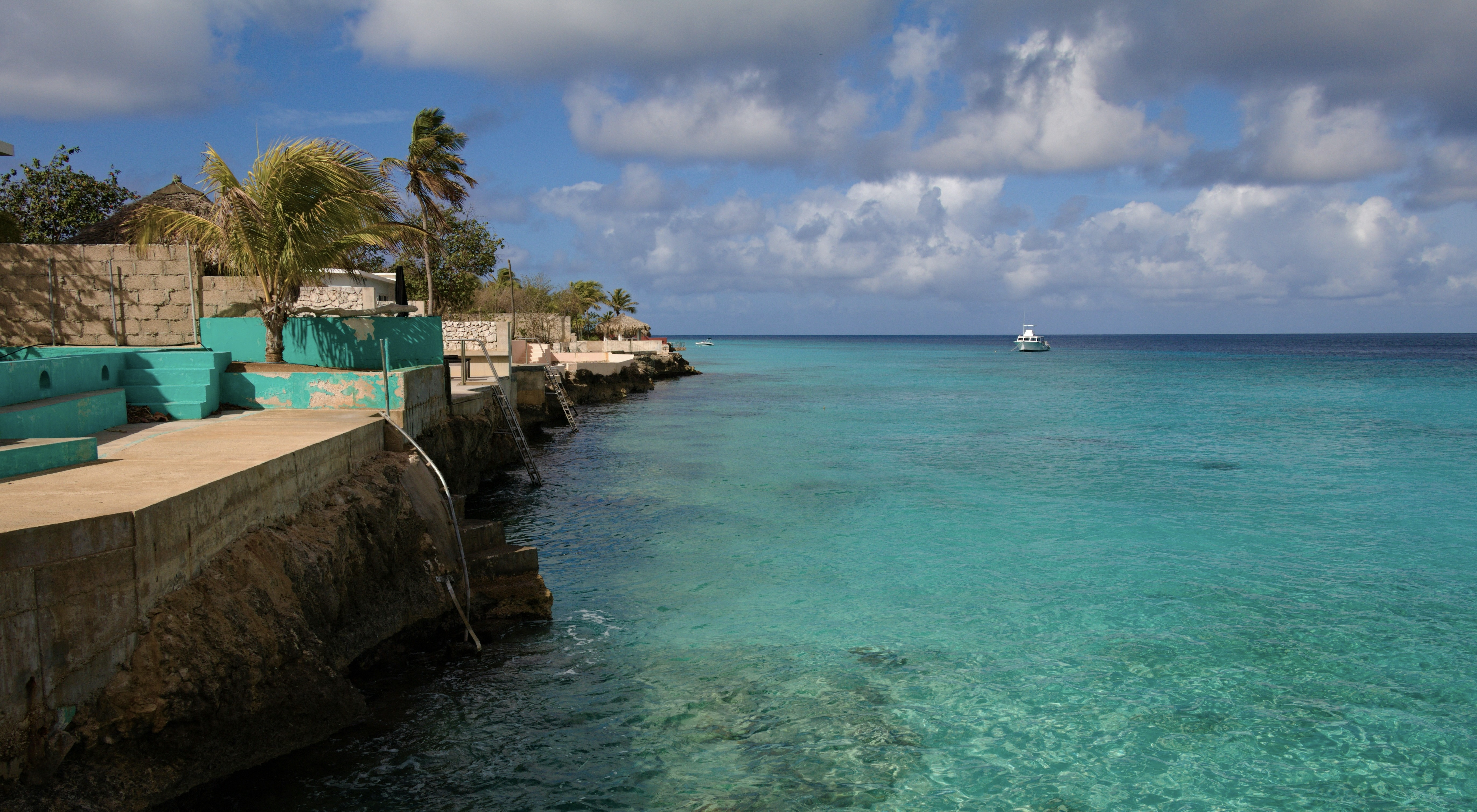
The residents of Bonaire have won a court case against the Dutch state concerning climate change. According to the judge, they are not being adequately protected against the consequences of climate change. This ruling marks an important milestone for climate justice within the Kingdom and highlights the importance of addressing climate and biodiversity issues on the islands. We gave a guest lecture on this topic.
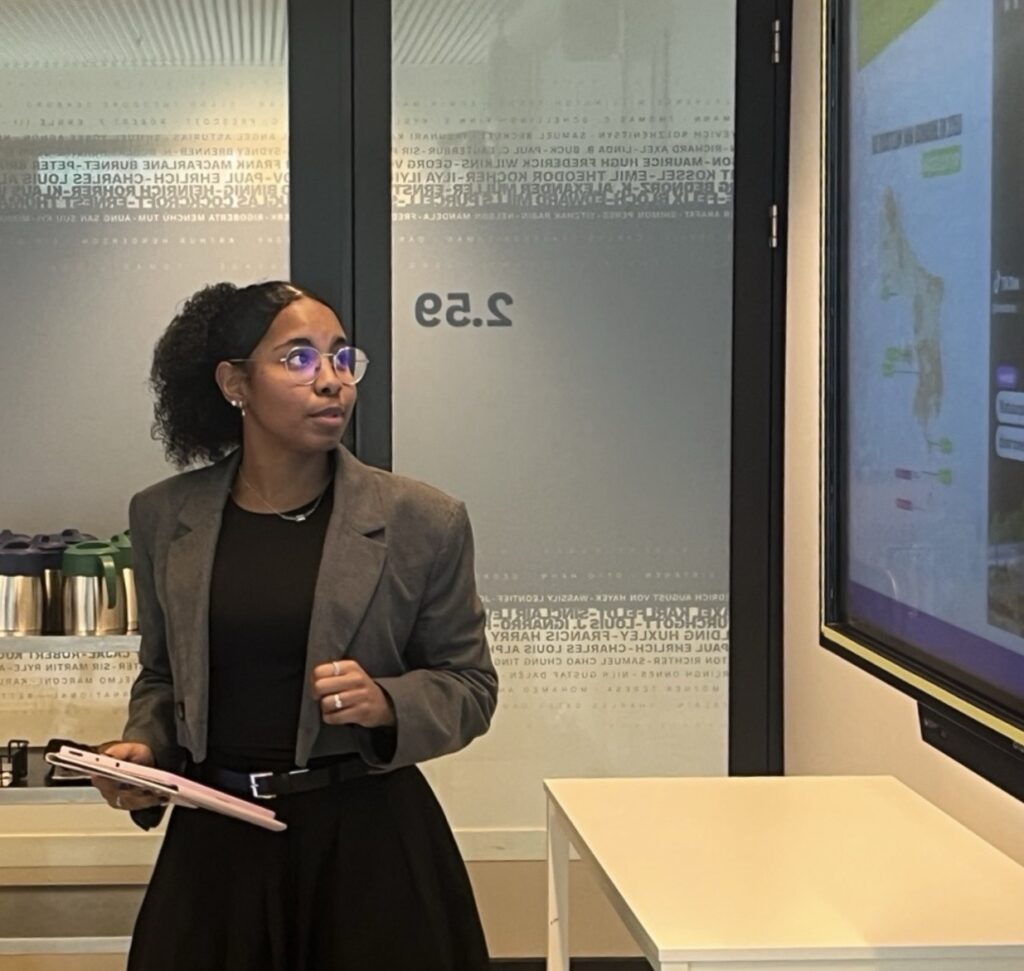
Rosa Groen and Chennery Cárdenas
A victory for Bonaire and a wake-up call for the Kingdom
On 28 January 2026, the court ruled that the Dutch state is failing to adequately protect the inhabitants of Bonaire from the effects of climate change. Furthermore, the court found that the inhabitants of Bonaire are treated differently from those in the European Netherlands without valid reason. According to the court, this is in breach of the European Convention on Human Rights. The court ordered the State to set binding interim targets for reducing greenhouse gas emissions within 18 months and to implement a concrete plan by 2030 at the latest to better protect Bonaire from the consequences of climate change. In doing so, the court makes it clear that the Dutch State has a concrete duty of care to protect the inhabitants of Bonaire against the consequences of climate change. 1
This ruling demonstrates that climate change is not solely a matter of nature and the environment, but also touches on rights, protection and justice. For many residents of the islands, the ruling was therefore seen as a recognition, as the consequences of climate change have been visible there for some time.
A unique but vulnerable natural environment
The Caribbean is one of the most species-rich natural areas in the world. The region is internationally recognised as a biodiversity hotspot. 2 The area is home to more than 25,000 plant and animal species, ranging from coral and mangroves to sea turtles and tropical fish. 3 This natural environment is not only valuable for its beauty, but also plays a vital role in daily life on the islands. Coral reefs protect coastlines from storms and erosion. 4 Mangroves store large amounts of carbon and contribute to the protection of coastal areas. Seagrass beds and mangroves also serve as important habitats and nursery areas for fish and other marine species. 5
At the same time, these ecosystems are under increasing pressure. According to the State of Nature report, nature in the Caribbean Netherlands is in a moderate to poor state. Factors such as pollution, overfishing and invasive species are contributing to the loss of biodiversity. 6 Climate change exacerbates these problems and poses an additional threat to ecosystems on the islands. 7
The consequences of climate change on the islands
On the islands, climate change is no longer a future scenario. The consequences are already being felt. Among other things, the following changes are being observed:
- Rising temperatures. Temperatures are increasing and hot days are starting earlier and earlier in the year. 8 In some neighbourhoods on Curaçao, surface temperatures of up to 48 degrees are even being recorded. 9
- Changing rainfall patterns. Although the total amount of rain may decrease, rain showers are becoming increasingly intense. 10 This increases the risk of flooding and damage to nature and infrastructure. For instance, extreme rainfall caused dam breaches and polluted the coastal waters at Playa Lagun on Curaçao. 11
- Ocean warming. Rising sea temperatures cause coral bleaching. 12 According to researchers at CARMABI, warm seawater is one of the greatest stress factors for coral reefs. When reef-building corals die, natural recovery is often difficult or even impossible. 13
- Sea-level rise and risk of flooding. Due to sea-level rise, parts of Bonaire may become submerged in the future. 14 Moreover, much of the cultural heritage, such as the slave huts and salt pans, is located in low-lying coastal areas and is therefore at particular risk.
Climate change thus affects not only nature, but also the daily lives of people on the islands, from their health to their work in tourism and fishing. Oldeman emphasises that the measures taken by governments to adapt to these changes, also known as climate adaptation, play a significant role in determining whether extreme weather conditions lead to damage or even disasters. 15
An unequal climate policy
Since the constitutional reform of 10 October 2010, Bonaire, St Eustatius and Saba have formally been part of the Netherlands, with the promise of equal rights and protection for all residents. 16 In practice, however, significant differences still exist between the European Netherlands and the Caribbean Netherlands.
One example of this is that international climate agreements formally apply only to the European part of the Netherlands. As a result, emissions from the Caribbean islands are not included in international climate targets and access to international climate finance is limited. 17
Furthermore, Lloyd Narain of the environmental organisation Amigu di Tera points out that small islands face structural constraints. Due to their scale and economic dependence, they have less influence on international developments, whilst being heavily dependent on decisions taken elsewhere. 18
What does this mean for Bonaire and the rest of the islands?
For the first time, a judge has clearly stated that the Dutch state has a responsibility to protect residents of the Caribbean islands from climate change as well. 19 This ruling therefore marks an important moment for climate justice within the Kingdom.
According to Narain, this decision could have implications for other islands in the Caribbean part of the Kingdom, as they face similar vulnerabilities and administrative structures. 18
At the same time, the ruling emphasises how important it is to pay greater attention to climate and biodiversity on the islands. After all, climate change is not just about rising temperatures or sea levels, but also affects nature, the economy, culture and people’s daily lives. According to researchers, this also calls for concrete measures for climate adaptation, so that communities are better prepared for extreme weather conditions. 20 Bonaire’s victory is therefore more than a legal ruling. It is also a call to listen more closely to the islands and to work together towards a just and sustainable future.
Rosa Groen Waarom ik actief ben: Rosa Groen

Chennery Cárdenas is a final-year student of European Studies at The Hague University of Applied Sciences and works as a student assistant to Rosa Groen. Originally from Curaçao, she focuses her studies and work on climate justice, biodiversity and the consequences of climate change for Caribbean islands, alongside an interest in energy transitions and nature restoration.
- The Hague District Court. (28 January 2026). Dutch State fails to adequately protect Bonaire’s inhabitants against climate change. https://www.rechtspraak.nl/organisatie-en-contact/organisatie/rechtbanken/rechtbank-den-haag/nieuws/nederlandse-staat-beschermt-inwoners-bonaire-onvoldoende-tegen-klimaatverandering[↩]
- World Bank Group. (5 March 2024). Preserving paradise: Local solutions for Caribbean biodiversity. https://www.worldbank.org/en/news/feature/2024/03/04/preserving-paradise-local-solutions-for-caribbean-biodiversity[↩]
- WWF. (n.d.). Caribbean. https://www.wwf.nl/wat-we-doen/waar-zijn-we-actief/caribisch-gebied[↩]
- Van Veghel, M. (2026, 8 January) Personal communication. CARMABI researcher[↩]
- DCNA. (2025, 25 July). Mangroves in the Dutch Caribbean: Vital, vulnerable, and vanishing. https://dcnanature.org/sonmangroves/?lang=nederlands[↩]
- IUCN. (21 May 2025). The clock is ticking for nature in the Caribbean Netherlands: Action and support needed from the Netherlands. https://www.iucn.nl/nieuws/vijf-voor-twaalf-voor-natuur-in-caribisch-nederland-actie-en-steun-nodig-vanuit-nederland/[↩]
- Debrot, A. O., & Verweij, R. J. H. G. (2017). State of Nature in the Caribbean Netherlands 2017. 1848 Monitor. https://app.1848.nl/document/tkapi/407280[↩]
- Antilliaans Dagblad. (2022, 14 November). Curaçao is getting warmer. https://antilliaansdagblad.com/artikel/curacao/26656-curacao-wordt-warmer[↩]
- Feelin’ Hot project. (n.d.). Feelin’Hot! A Caribbean climate resilience tool. https://www.feelinghot.org/data#cur[↩]
- Van Dam, O. & Samsom, J. (2022, 23 September). Tropical wave causes flooding on Curaçao. https://caribischnetwerk.ntr.nl/2022/09/23/tropische-golf-zorgt-voor-overstromingen-op-curacao/[↩]
- Star Nieuws. (5 May 2024). Curaçao suffers damage from heavy rains and dam breaches. https://www.starnieuws.com/index.php/welcome/index/nieuwsitem/80913[↩]
- CARMABI. (5 December 2023). Carmabi has noticed ‘coral bleaching’ around Curaçao. https://dcnanature.org/2023-coral-bleaching/?lang=nederlands[↩]
- Van Veghel, M. (8 January 2026). Personal communication. CARMABI researcher.[↩]
- Greenpeace. (n.d.). The impact of climate change on Bonaire. https://www.greenpeace.org/nl/bonaire-2/bonaire-klimaat-feiten/[↩]
- Oldeman, A. (24 February 2026). Climate adaptation: policy-making for climate change in the Netherlands. Netherlands Academy of Governance. https://www.bestuursacademie.nl/blog/klimaatadaptatie-beleid-maken-voor-klimaatverandering-in-nederland[↩]
- Netherlands Institute for Human Rights. (10 October 2025). Fifteen years after 10-10-10: The promise of equality and the limits of the ‘comply or explain’ principle. https://www.mensenrechten.nl/actueel/nieuws/2025/10/10/vijftien-jaar-na-10-10-10-de-belofte-van-gelijkheid-en-de-grenzen-van-het-comply-or-explain-principe[↩]
- Misiedjan, D. (2022). Climate and the Kingdom: Why international climate agreements do not apply to the Caribbean islands. Nederlands Juristenblad (NJB), 2022(21), 1683[↩]
- L. Narain, personal communication, 12 February 2026[↩][↩]
- The Hague District Court. (28 January 2026). Dutch State fails to adequately protect Bonaire residents from climate change. https://www.rechtspraak.nl/organisatie-en-contact/organisatie/rechtbanken/rechtbank-den-haag/nieuws/nederlandse-staat-beschermt-inwoners-bonaire-onvoldoende-tegen-klimaatverandering[↩]
- Oldeman, A. (24 February 2026). Climate adaptation: developing policy for climate change in the Netherlands. Bestuursacademie Nederland. https://www.bestuursacademie.nl/blog/klimaatadaptatie-beleid-maken-voor-klimaatverandering-in-nederland[↩]