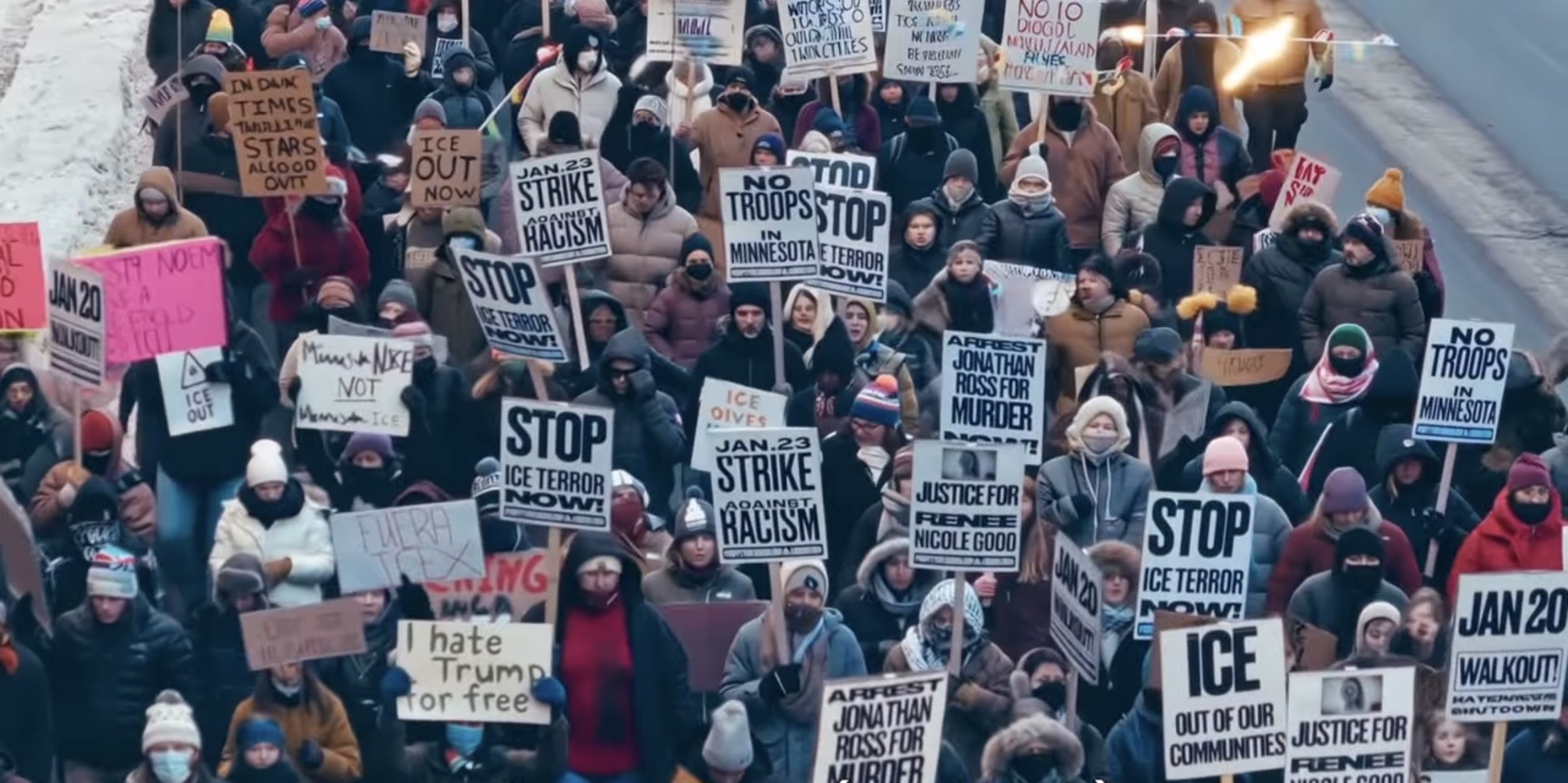
Despite the federal government’s strong violent response, citizens of Minneapolis are organising non-violent resistance and support groups. They are following ICE agents, who are heavily armed and attempting to arrest alleged illegal immigrants. Recently, they killed two American citizens. New grassroots movements are emerging in cities where people feel threatened by their own government.
This article is a summary of two posts on Substack by Teri Leigh 1 and Anne Applebaum. 2 The latter author cites Lydia Polgreen of The New York Times, who described the scene in Minneapolis as a ‘spectacle of cruelty’ aimed at intimidating a state that resists the Trump administration’s hard-line immigration agenda.
In early 2026, Minnesota became a flashpoint of federal–state conflict. Masked federal agents, posing as military officers, shot two peaceful demonstrators who were documenting the government’s violent crackdown on immigrants and citizens. Video evidence contradicted official statements labelling the victims ‘domestic terrorists’, exposing a familiar authoritarian tactic of blaming victims to legitimise repression.
The situation escalated further when Attorney General Pam Bondi sent Governor Tim Walz an extraordinary letter demanding access to Minnesota’s voter-registration records, among other things — a move that threatens state sovereignty and suggests an attempt to influence the upcoming midterms. The federal government’s use of a quasi-paramilitary force to coerce a state highlights a broader strategy of selective terror intended to suppress dissent and influence electoral outcomes.
Grassroots movement

Amid this turmoil, a vibrant grassroots response emerged. Local businesses — including donut shops, bookstores, pizza joints, and even an adult store — converted their spaces into warming houses, medical centres, and donation hubs. Independent journalists continued to report despite sustaining severe injuries, 3 while tow-truck firms waived fees to clear wrecked vehicles left behind by ICE raids. Multi-faith leaders organised sit-ins at corporate headquarters, social workers sheltered displaced children and animal shelters rescued abandoned pets. Residents, ranging from mothers in reflective vests to National Guard volunteers offering coffee and doughnuts, formed an underground network that provided food, transportation, and emotional support.
These acts illustrate a paradox: while federal forces employ intimidation and violence, Minnesotans demonstrate extraordinary solidarity, transforming everyday institutions into lifelines. The crisis thus reveals both the fragility of democratic norms under authoritarian pressure and the capacity of ordinary citizens to defend their community, justice and the Constitution in the face of adversity.
Note. This article was written with the help of Lumo AI and then checked by real people for correct content.