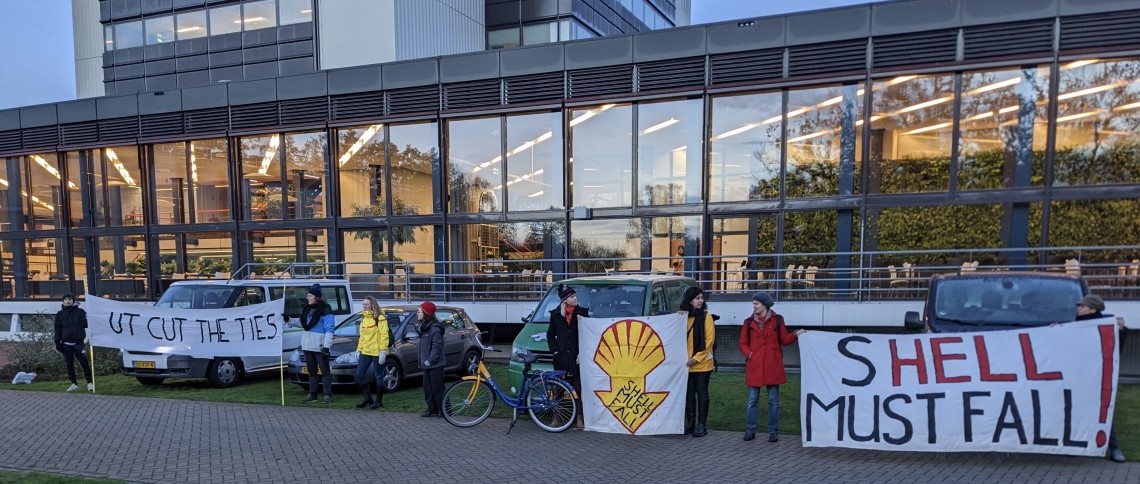
Shell’s influence on the energy transition also extends to the lecture hall. The oil giant is helping to shape the language, tone and direction of the energy transition.
This is a summary of an article that appeared in the daily newspaper Trouw on 12 December. It was written by Sjors Roeters in collaboration with the journalism platform Momus.
Scientist Rebellion has been warning for years about the influence of big business on education. It is a way for the agricultural and fossil fuel industries to slow down the transition to a sustainable society and steer it in a direction that maximises profits for these companies. This is at the expense of the health and happiness of ordinary citizens.
Research by the journalism platform Momus and Trouw, based on documents and interviews obtained through Freedom of Information requests by research agency Solid Sustainability Research, reveals how Shell influences both the direction and the language used in relation to the energy transition through Dutch universities. This influence ranges from sponsored chairs and teaching materials to assignments and access to company information. For example, master’s students in the Inclusive Energy Transition honours programme at Erasmus University receive assignments prepared by Shell for eight months.
The programme leader, Professor Jasper Eshuis (EUR), states that the collaboration is assessed in accordance with university rules and that the assignments are not focused on oil exploration, but on promoting the transition from Shell’s perspective. The university will reassess the collaboration each academic year.
Critical voices, including ministerial and parliamentary questions about the transparency of special chairs, have led to consultations with universities. Professor Arjen Wals (WUR) warns that such collaborations can narrow the academic space and shift critical thinking towards corporate frameworks. Manchester professor Maria Sharmina notes that, although no direct causality has been demonstrated, the consistent correlation raises questions about the impact on scientific and public debate on climate solutions. Shell emphasises that academic independence is paramount, refers to its own information and does not respond substantively to the research.