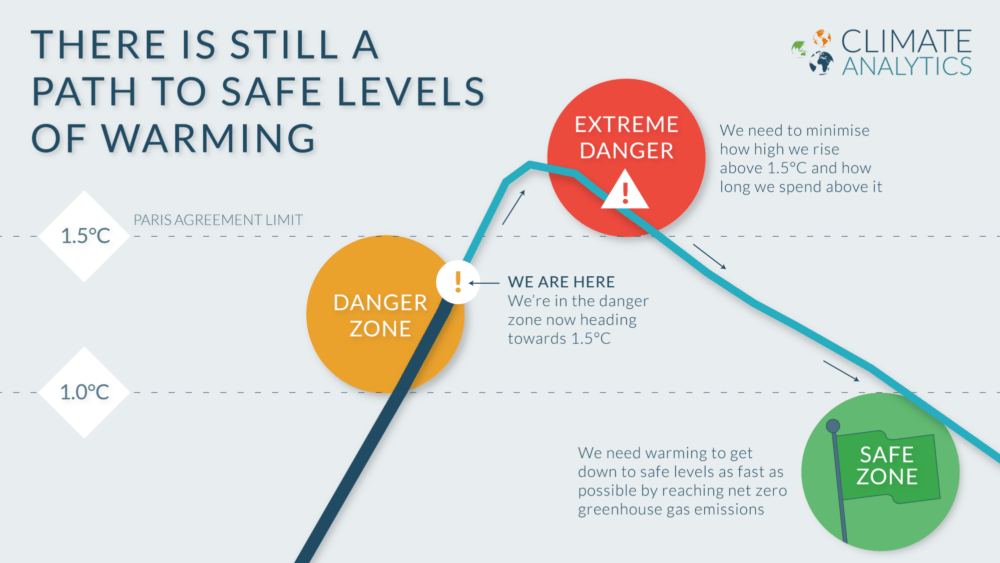
There is little time left to prevent global warming caused by greenhouse gas emissions from exceeding 1.5 °C (compared to the pre-industrial period). In other words, the amount of greenhouse gases we can still emit – the carbon reserve – is almost depleted.
Meanwhile, in the United States, President Donald Trump is rapidly dismantling virtually all measures related to combating climate change. The plans of Europe, Japan, Australia and New Zealand appear to be insufficient. In addition, oil companies are distancing themselves from their earlier green promises. In the Netherlands, too, climate ambitions are being scaled back.
Burning fossil fuels to generate energy and heat has enabled society to develop and flourish, but now we are seeing the unintended consequences. The carbon dioxide added to the atmosphere is causing global temperatures to rise, melting ice caps, raising sea levels, changing ocean currents, making heat waves hotter and torrential rains more intense — to name just a few consequences.
The resulting large-scale disruption of society and increasing human suffering are becoming increasingly visible. Moreover, climate change is exacerbating existing inequalities in the world.
By now (end of 2025), it is becoming increasingly unlikely that warming will be limited to 1.5 or even 2 °C above pre-industrial levels, the target of the Paris Agreement. Not because it is technically unfeasible, but because climate policy and measures are simply being implemented too slowly. Although sustainable developments are progressing rapidly, the use of fossil fuels is not being reduced quickly enough. The global average temperature has risen to 1.3 °C above that of 1850 — in Europe 2.4-2.5 °C and in the Arctic even 3.3 °C — according to an overview by the European observatory Copernicus.
In addition, reality is sometimes even overtaking scientific projections. Certain developments that most climate models had only expected in the future are already happening, such as dangerously high temperatures from extreme heat waves.
A report by a large group of medical scientists in the leading journal The Lancet calls for “unprecedented warming requires unprecedented action.”
Until we reduce global carbon dioxide emissions to “net zero,” the planet will continue to warm, and this will have a negative impact on much of life on Earth. Future generations will continue to experience the negative effects of living in a warmer climate for a long time to come. The choices we make now will have a major impact on the future.
This video summarises it well.
Read the rest of this article on the Extreme Urgency page of the Klimaatwiki.