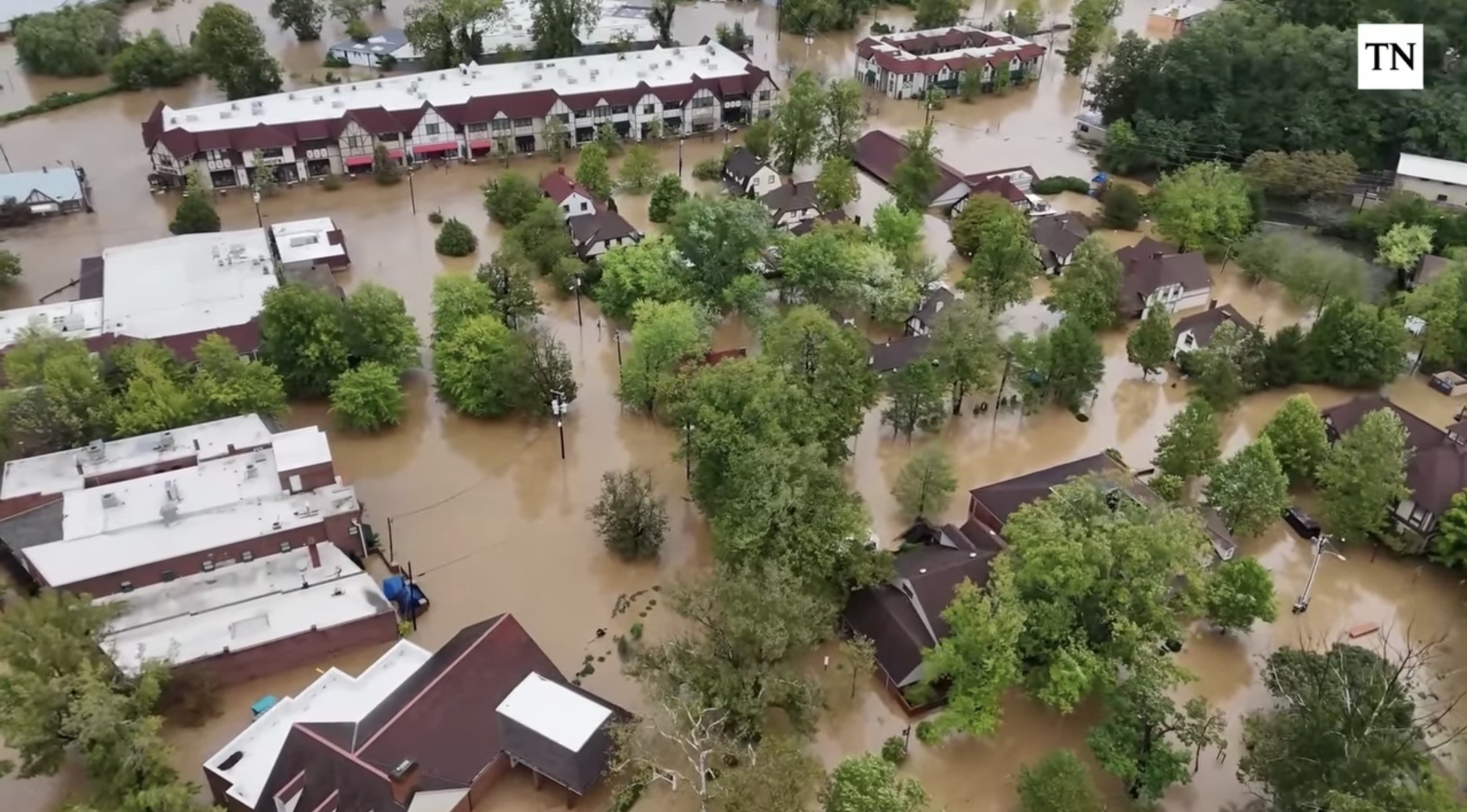
There are no places on Earth where we are guaranteed to be safe from the effects of climate change. This became apparent when the residents of Asheville (North Carolina, USA) were surprised at the end of September 2024 by Hurricane Helene, which caused devastation and claimed victims far from the coast. The artists’ town of Asheville had long been described by some press agencies as a ‘climate paradise’, or a place that is safe from climate change. It is not affected by the forest fires that often occur in parts of California or the storm surges that often disrupt life in coastal towns.
Helene may have received an extra boost from the moist soil left behind by the rains that swept through the region before it hit Asheville. Scientists call this phenomenon the brown ocean effect, because it causes water-saturated soil to affect a storm in the same way as the sea surface.
The personal story of Peter Kalmus Peter Kalmus is a climate scientist who left Los Angeles two years before the devastating fires of January 2025. He writes in the New York Times that he saw the fires coming. Because it no longer felt safe, he moved with his family to North Carolina, not far from the ‘climate paradise’ of Asheville. His old neighbourhood in LA, including the house where his children grew up, has been completely burned down. Whether his new home will be safe remains to be seen.
In Europe, too, there are places where the risk is greater, such as coastal areas, river valleys or forest areas, and areas that are less risky. But nowhere are we completely free from the effects of climate change. In the foreseeable future, our choice of where to live will no longer be determined solely by our economic or lifestyle preferences, but also by the level of our insurance premiums.
This article can be found on the Extreme Urgency page of the Klimaatwiki.